
Collaborations
Support diagnose and optimize existing treatments. Add detailed insights with real-world data.
Research collaborations
Cross-AI
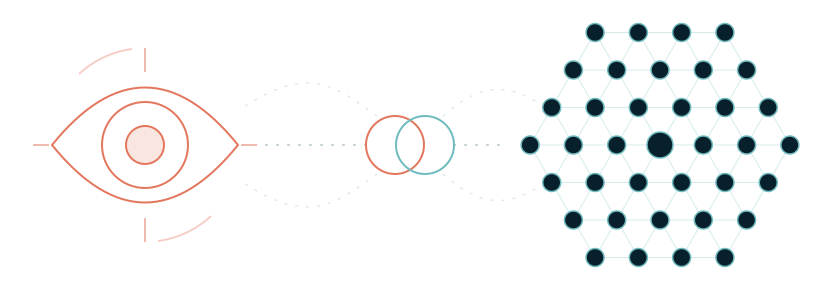
Cross-AI is the research collaboration between Stardots and BrainZell, investigating how drug responses in patient-derived neural organoids relate to measurable effects in people. Combining complementary technologies and the AI expertise of both companies, the partners aim to connect laboratory research with human measurements.
The combined human–organoid approach is at an early research stage. Any predictive or clinical application would require further validation and, where applicable, regulatory review.
Explore Cross-AITechnology platforms
Turn gaze patterns into clinical insights
See more. Assess neurological and psychological function with easy-to-use gaze analysis. Extensive research links eye motion to brain function, with growing potential for clinical use. Our solution is fast, non-invasive, and works with widely available eye-tracking sensors.
ANLIVA® Eye Movement (patent pending) aims to measure biomarkers of Parkinsons disease severity within minutes.
Psilmi (patent pending) aims to to support Autism and ADHD diagnosis. 38 biomarkers are captured in under 10 minutes to guide interventions.
QUEST Eye Movement is under development for early screening of cognitive decline and recommendations of timely, personalized intervention.
Make sense of complex movement
Go beyond observation. Extract biomarkers from real-world motion with clinical precision. Our algorithms transform off-the-shelf sensors into powerful tools that can isolate body symptoms from voluntary movement. And allow you to act on details beyond what the eye can see.
ANLIVA® Hand Movement (patent pending) produces digital biomarkers from Parkinson tremor symptoms using regular phone sensors.
Predict treatment response
Find the optimal personal treatment with digital twins. Explore multiple options in minutes, supported by a physiological model of the patient. Simulate treatment response in remote care and ahead of clinic visits.
ANLIVA® Deep Brain Stimulation (patent pending) uses a digital twin to recommend precise, highly personalized Parkinson’s disease therapy based on CRT and MRI image data.
Optimize outcomes
Support clinical decisions with multiple digital biomarkers. Our Software as a Medical Device (SaMD) solutions are powerful on their own, and even better together.
The ANLIVA® Platform for Parkinsons disease will integrate eye-tracking, motion analysis, digital twin technology and more. Our goal is to use a stream of digital biomarkers from clinic visits and everyday life to optimize Parkinson’s care—both in the clinic and remotely.
Perspectives
I am happy to work with Stardots towards launching and conducting this clinical trial. This is a promising step to achieve a much needed mathematical and objective physical biomarker that is both reliable and easy to collect. Such biomarkers are essentially helpful to our patients of Parkinson’s Disease.
It’s a very friendly atmosphere at Stardots – we are all buddies.
Digital health tools have vast potential improve our ability to accurately diagnose and treat disease. And to enhance the delivery of health care for the individual, making medical care truly personalized
A solution like Stardots is developing is of the utmost importance and the only way if we want a state of knowledge that enables us to obtain better treatment methods than those that exist today.